
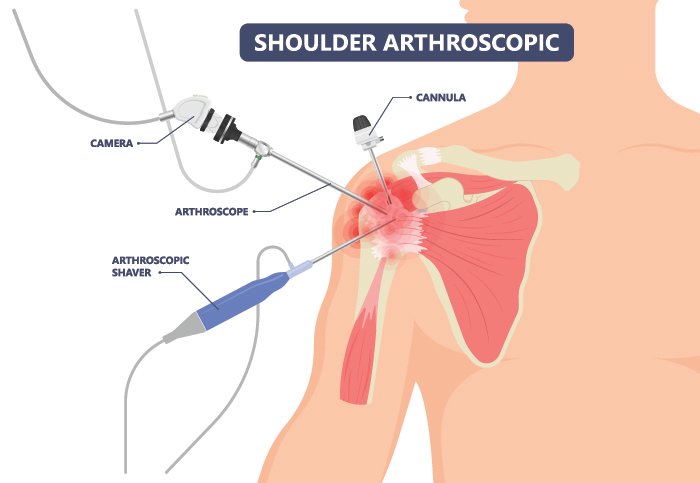
What Is Shoulder Arthroscopy?
Conditions Treated with Shoulder Arthroscopy
Shoulder arthroscopy helps treat several orthopedic shoulder conditions effectively, including:
Rotator Cuff Tears
Rotator cuff injuries commonly cause pain, weakness, and difficulty lifting the arm. Arthroscopy helps repair torn tendons while preserving healthy tissue.
Shoulder Impingement Syndrome
Inflamed shoulder tendons may get compressed during arm movement. Arthroscopy removes inflamed tissue and creates more space inside the joint.
Shoulder Instability
Repeated shoulder dislocations can damage ligaments and cartilage. Arthroscopic stabilization helps restore joint support and improve shoulder function.
Labral Tears
The labrum supports shoulder stability. Arthroscopy repairs torn cartilage and improves shoulder movement.
Frozen Shoulder
Some patients experience severe stiffness and restricted movement. Arthroscopy helps release tight tissues and improves mobility.
Shoulder Arthritis
In selected cases, arthroscopy helps clean damaged tissues and reduce inflammation inside the joint.
Symptoms That Need Shoulder Arthroscopy Evaluation
You should consult an orthopedic specialist if you experience:
- Persistent shoulder pain
- Difficulty lifting the arm
- Weakness during movement
- Shoulder stiffness
- Clicking or popping sensation
- Recurrent shoulder dislocation
- Pain during sports activities
- Limited range of motion
- Night pain affecting sleep
Early treatment helps prevent further joint damage and improves recovery outcomes.
Benefits of Shoulder Arthroscopy
Modern shoulder arthroscopy offers several advantages for patients.
Minimally Invasive Procedure
Small incisions reduce tissue damage and improve cosmetic results.
Faster Recovery
Patients usually recover faster compared to traditional open surgery.
Less Postoperative Pain
Smaller cuts reduce discomfort after surgery.
Reduced Risk of Infection
Tiny incisions lower the chances of infection and complications.
Better Joint Visualization
The arthroscope provides clear images for accurate diagnosis and treatment.
Improved Shoulder Function
Most patients regain shoulder movement, flexibility, and strength after rehabilitation.
Shoulder Arthroscopy Procedure
Initial Consultation
Dr. Ambar Daware performs a detailed examination to understand your symptoms, activity level, and shoulder condition.
Diagnostic Evaluation
The doctor may recommend:
- X-rays
- MRI scans
- Physical examination
- Range of motion assessment
These tests help determine the exact cause of shoulder pain.
Surgical Procedure
The arthroscopy procedure is usually performed under anesthesia. Tiny incisions are made around the shoulder joint. The arthroscope is inserted, and specialized instruments repair damaged tissues.
Depending on the condition, the surgeon may:
- Repair torn tendons
- Remove inflamed tissue
- Stabilize ligaments
- Treat cartilage injuries
- Release tight shoulder structures