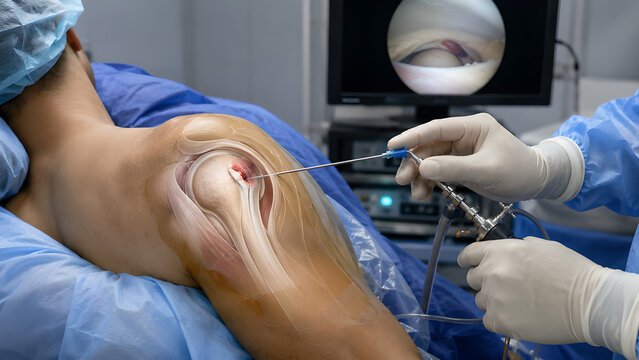
Shoulder arthroscopy can help surgeons manage selected conditions involving different structures around the shoulder joint. Moreover, doctors may consider arthroscopic procedures for some rotator cuff tears, labral injuries, shoulder instability, impingement-related problems, and certain cartilage or joint conditions. Therefore, the exact procedure depends on the diagnosed problem and its severity. In addition, imaging and clinical examination can help identify the structures that require attention. However, similar symptoms can occur with different shoulder conditions. As a result, proper diagnosis should come before selecting a surgical treatment.
The rotator cuff includes muscles and tendons that help control shoulder movement and stability. Moreover, injuries or tears can cause pain, weakness, difficulty lifting the arm, and discomfort while sleeping. Therefore, an orthopedic specialist should assess shoulder strength, movement, pain patterns, and previous treatment before discussing arthroscopic repair. In addition, imaging such as MRI or ultrasound may provide useful information when clinically appropriate. However, not every rotator cuff problem requires surgery. As a result, the surgeon can compare rehabilitation, medicines, activity modification, and surgical options according to your condition.
The labrum helps provide stability around the shoulder socket, and a tear can contribute to pain, clicking, catching, or instability. Moreover, athletes and active individuals may develop labral injuries after falls, collisions, repetitive throwing, or shoulder dislocation. Therefore, an orthopedic surgeon can evaluate shoulder stability and review imaging before discussing treatment. In addition, rehabilitation may play an important role for selected patients, while some injuries may require arthroscopic repair. However, treatment depends on the location, severity, cause, and functional impact of the tear. As a result, a personalized assessment can help determine the appropriate approach.
Shoulder dislocation can stretch or damage structures that help stabilize the joint. Moreover, some patients may experience repeated episodes of the shoulder slipping or dislocating during certain movements. Therefore, an orthopedic specialist should assess shoulder stability and identify any associated bone, labral, or soft-tissue injury. In addition, imaging can help the surgeon understand the extent of structural damage when required. However, repeated instability does not automatically mean that every patient needs surgery. As a result, treatment should follow the patient’s age, activity level, injury pattern, instability history, and clinical findings.
Shoulder pain can develop from sports injuries, tendon problems, arthritis, overuse, trauma, instability, or other conditions. Moreover, persistent pain can interfere with reaching overhead, lifting objects, dressing, working, and sleeping. Therefore, an orthopedic doctor can examine shoulder movement, strength, tenderness, and stability before recommending treatment. In addition, non-surgical care may include physiotherapy, exercises, medicines, activity modification, or selected injections depending on the diagnosis. However, ongoing symptoms may require additional investigation. As a result, proper assessment can help identify whether conservative treatment or arthroscopy may suit your condition.
A clear diagnosis helps the orthopedic surgeon plan appropriate treatment. Moreover, the consultation may include questions about the onset of pain, previous injuries, activity level, occupation, sports participation, and earlier treatment. Therefore, the doctor can combine your medical history with physical examination findings. In addition, X-rays, MRI, ultrasound, or other investigations may provide more information when clinically appropriate. However, imaging alone cannot determine the complete treatment plan. As a result, the surgeon should consider symptoms, examination findings, imaging, and functional limitations together.